


Am I A Candidate For Ketamine Therapy For Depression Or Anxiety? A Practical Self-Check
Ketamine therapy may be worth exploring for people with persistent depression, anxiety, PTSD, or other mood-related symptoms that have not improved enough with standard care. This guide helps patients complete a simple candidacy self-check, understand what an intake includes, and decide whether physician-led, medically supervised ketamine therapy may be a reasonable next step.

When to Refer for Ketamine Therapy: A Practical Guide for Providers
Ketamine therapy referrals are most helpful when they are grounded in a clear clinical picture: prior treatment history, current symptoms, safety considerations, and goals for care. This provider guide outlines when referral may make sense, what information supports a better consult, and how coordinated care can help patients explore ketamine therapy responsibly.

Postpartum Depression Symptoms & Treatment Options
Postpartum depression is different from the “baby blues.” When depression symptoms become more intense, last longer, or interfere with sleep, bonding, appetite, energy, or daily care, support matters. Treatment may include therapy, medication, coordinated perinatal care, or, for carefully screened patients, evaluation for ketamine therapy as part of a broader care plan.

Treatment-Resistant Depression in Real Life: What Progress Can Look Like
Treatment-resistant depression can look different in real life than it does on paper. For some patients, progress means remission; for others, it means fewer suicidal thoughts, more energy, stronger relationships, or enough relief to participate in daily life again. Max and Charles’s stories show how ketamine therapy may help selected patients move from simply functioning toward greater stability, confidence, and connection.

When Anxiety Lives in the Body, Not Just the Mind
Anxiety is not always experienced as racing thoughts. For many people, it shows up first in the body: tight chest, racing heart, nausea, dizziness, muscle tension, poor sleep, or a sense that something is wrong. Understanding the physical symptoms of anxiety can help patients recognize the pattern, talk with a provider, and find support that addresses both the mind and body.

Why pacing matters in chronic pain recovery
Pacing can help people with chronic pain interrupt the “boom and bust” cycle of overdoing, flaring, and crashing. Instead of doing as much as possible on better days, pacing creates a more sustainable rhythm of activity, rest, and gradual progress so patients can protect function, build confidence, and make daily life feel more manageable.

Mail-Order Ketamine Risks: Why Medical Supervision Matters
Mail-order ketamine can sound convenient, but ketamine therapy still requires careful medical judgment, appropriate dosing, monitoring, and follow-up. Without in-person support, side effects or difficult reactions may be harder to recognize and manage. For patients exploring ketamine, physician-led evaluation and supervised care can help determine whether treatment is appropriate, individualized, and supported from start to finish.

CRPS Life Expectancy and Pain Management: What Patients Should Know
CRPS is a complex chronic pain condition that can cause severe, persistent pain, sensitivity, swelling, movement changes, and disruption to daily life. While CRPS is not typically considered directly life-threatening, effective pain management matters because long-term pain can affect sleep, mobility, independence, mood, and quality of life. For selected patients, ketamine infusion therapy may be one part of a broader care plan focused on reducing pain burden and improving function.

OCD, Anxiety, and Depression: Why Symptoms Often Overlap
OCD rarely affects only one part of life. When intrusive thoughts, compulsions, avoidance, and uncertainty start taking up significant time and energy, anxiety and depression can follow closely behind.
For some patients, OCD is the main condition. For others, anxiety or depression is what feels most obvious at first. Over time, patients may realize that the symptoms are connected.
Understanding that overlap can help patients make more sense of what they are experiencing and find a more complete care plan.

Ketamine for OCD: How It May Support More Flexible Thinking and Symptom Relief
OCD can make the mind feel stuck in repetitive loops of intrusive thoughts, anxiety, and compulsive responses. Ketamine therapy may help some patients create more flexibility in those patterns, reduce distress, and make more room for therapy, daily life, and meaningful progress.

OCD Can Be Challenging to Treat — and Progress Is Still Possible
OCD can be challenging to treat because it is built around a loop: an intrusive thought or fear appears, anxiety rises, a compulsion offers temporary relief, and then the fear returns.
That loop can become deeply practiced over time. It can affect daily routines, relationships, work, school, parenting, faith, health decisions, and a person’s ability to feel comfortable in their own mind.
But challenging does not mean hopeless. OCD is treatable, and many people experience meaningful improvement with the right support, the right strategy, and enough time to build new patterns.

What OCD Actually Feels Like: More Than Being “Particular” or Organized
Obsessive-compulsive disorder, or OCD, is often misunderstood. In everyday conversation, people may use “OCD” to describe being neat, organized, detail-oriented, or particular about how things are done.
But clinical OCD is not a personality quirk. It is a mental health condition that can be distressing, time-consuming, and deeply disruptive.
OCD often involves intrusive thoughts, images, urges, or fears that feel unwanted and difficult to dismiss. These are called obsessions. In response, a person may feel driven to perform certain behaviors or mental rituals to reduce anxiety, prevent something bad from happening, or feel temporarily reassured. These are called compulsions.
For many people, OCD is not about liking things a certain way. It is about feeling caught in a loop that is difficult to interrupt.

Ketamine for PTSD: What Patients Should Know Before Starting Treatment
Ketamine therapy is increasingly discussed as an option for patients with depression, anxiety, PTSD, and other difficult mental health conditions. For some patients with PTSD, especially those who have also struggled with treatment-resistant depression or chronic suicidal thoughts, ketamine may be worth evaluating.
But ketamine is not a cure for PTSD. It is not a replacement for trauma-focused therapy, psychiatric care, medication management, sleep support, or the relationships and routines that help a person heal.
Ketamine is best understood as one possible tool within a broader care plan.
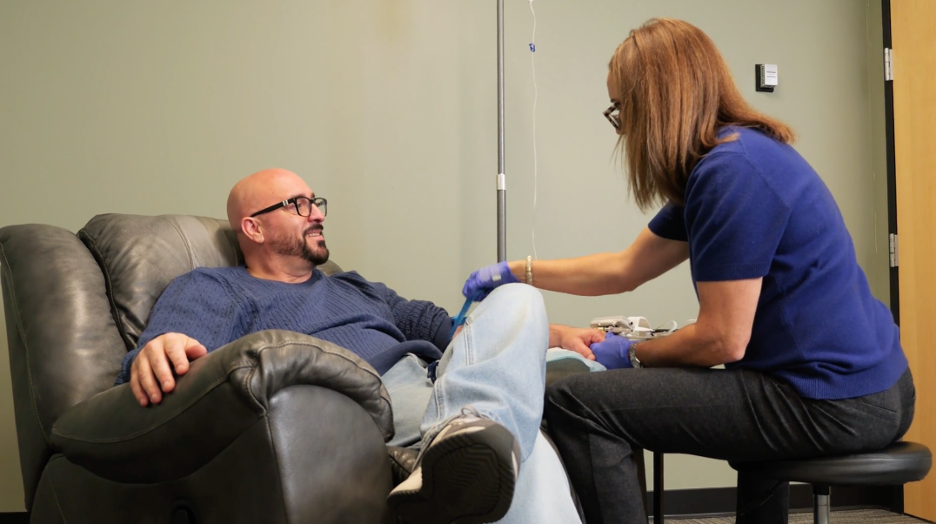
Jeff’s Story: PTSD, Depression, and Finding a Treatment That Helped Him Stay Present
Jeff is a Navy veteran, a medical professional, a husband, and a father of three. He spent 12 years in the Navy, primarily with the Marines, as a combat medic. He also spent many years overseas, including time in Iraq.
As he explains it, some things come home with you.
For Jeff, PTSD was not an abstract diagnosis. It affected how he moved through the world, how he slept, how he responded to stress, and how present he could be with the people he loved. He describes living in a state of hyperawareness: scanning, watching, adapting, pushing through, and completing the mission.
For years, he kept functioning. He worked. He built a career. He moved forward. But functioning is not the same as healing.

PTSD, Depression, and Ketamine: Why These Conditions Often Overlap
PTSD and depression often travel together. A person may seek help because they feel depressed, exhausted, numb, anxious, irritable, or unable to function, only to realize that trauma symptoms are part of the larger picture.
For some patients, PTSD is the starting point. For others, depression is what finally brings them into care. Either way, the overlap matters because it can affect symptoms, treatment decisions, and how progress is measured.

What PTSD Can Feel Like in Daily Life
Post-traumatic stress disorder, or PTSD, is often misunderstood. People may think of it only as flashbacks or nightmares, but PTSD can affect nearly every part of daily life: sleep, work, relationships, parenting, concentration, mood, and the ability to feel safe in ordinary situations.
PTSD can develop after experiencing or witnessing a traumatic event. For some people, symptoms begin soon after trauma. For others, they appear later or become more noticeable when life changes, stress increases, or another event reactivates old memories.
PTSD is not weakness. It is not overreacting. It is a nervous system and mental health response to trauma that has not fully resolved.

What Migraine Really Feels Like: More Than a Bad Headache
Migraine is more than a bad headache. It is a neurological condition that can involve nausea, sensory sensitivity, aura, brain fog, fatigue, and days of disrupted function. For people with frequent or difficult-to-control migraine attacks, understanding the full pattern of symptoms can be an important step toward a more complete care plan.

What Happens After Ketamine Treatment for Depression?
For many patients with treatment-resistant depression, the first question is whether ketamine therapy might help. The next question is just as important:
What happens after the first series of treatments?
Ketamine is often discussed because it may work more quickly than traditional antidepressants for some patients. But long-term progress usually depends on more than a single infusion or a brief initial series. For patients who respond, maintenance planning can be an important part of care.
At Vitalitas Denver, the goal is not only to help patients feel better for a few days. The goal is to understand whether ketamine is creating meaningful improvement, how long that improvement lasts, and what kind of follow-up plan may help preserve it.

Migraine Can Be Challenging to Treat — but Options Still Exist
Migraine can be challenging to treat because it does not always follow a simple pattern. Triggers, symptoms, medication response, and attack frequency can vary from person to person. For patients with persistent or difficult-to-control migraine, a layered and individualized plan may help reduce lost days, improve function, and create more confidence in daily life.

What Is Treatment-Resistant Depression?
Depression is not the same for every patient. For some people, symptoms improve with therapy, lifestyle support, medication, or a combination of approaches. For others, depression persists even after they have tried multiple standard treatments.
That is often when the phrase “treatment-resistant depression” enters the conversation.
Treatment-resistant depression does not mean a person is untreatable. It means their depression has not responded adequately to the treatments that usually help many patients. For patients and providers, that distinction matters. Treatment-resistant depression can feel discouraging, but it also helps identify when it may be time to consider additional options.