


Persistent PTSD Symptoms in Littleton, CO: When Trauma Responses Continue After Treatment
We help you explore persistent PTSD symptoms, trauma treatment options, and thoughtful next steps in Littleton, CO.

OCD Treatment in Littleton, CO: When the Obsession-Compulsion Cycle Persists
We offer careful evaluations for people in Littleton living with persistent OCD symptoms, intrusive thoughts, and compulsive rituals.

Neuropathic Pain and Neuropathy in Littleton, CO: Why Nerve Pain Feels Different
We help you understand burning, tingling, electric nerve pain and when it may be time for a new treatment discussion.

CRPS Flares and Treatment Options for Complex Regional Pain Syndrome in Littleton, CO
We help patients in Littleton understand CRPS symptoms, flares, rehabilitation, and individualized IV ketamine therapy options.

Chronic Pain That Has Not Improved With Conventional Care: Understanding Treatment Pathways in Littleton, CO
We help you explore structured chronic pain management options when conventional care has not brought enough relief.

Chronic Migraine That Has Not Responded to Treatment in Littleton, CO
We help you understand chronic and refractory migraine, review your history, and discuss individualized next steps.

Anesthesiologists Are Asking for Stronger Ketamine Oversight. As One of Them, I Agree.
The American Society of Anesthesiologists is calling for stronger ketamine oversight — especially for at-home, unsupervised use. Dr. Eve Langston, MD, on why the answer isn't less access, but better, physician-led care.

Meet Dr. Eve Langston - Physician and Owner, Vitalitas Denver
Behind every treatment at Vitalitas is a physician — and behind the practice is Dr. Eve Langston, a Harvard-trained anesthesiologist who founded the longest-running ketamine clinic in the Denver metro nearly a decade ago. In this candid Q&A, she shares what sets physician-led care apart, how she thinks about cost and safety, what a first visit is really like, and what she'd tell anyone who's nervous to begin.
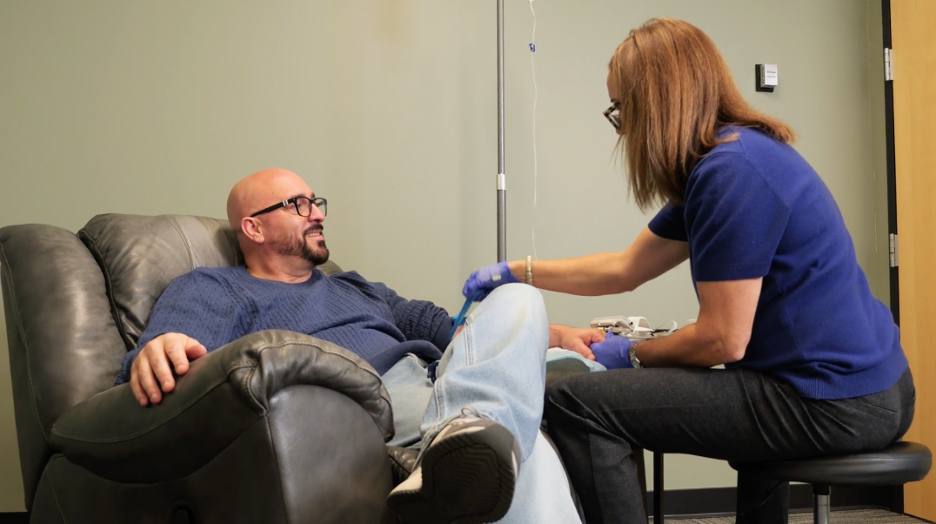
Jeff’s Story: PTSD, Depression, and Finding a Treatment That Helped Him Stay Present
Jeff is a Navy veteran, a medical professional, a husband, and a father of three. He spent 12 years in the Navy, primarily with the Marines, as a combat medic. He also spent many years overseas, including time in Iraq.
As he explains it, some things come home with you.
For Jeff, PTSD was not an abstract diagnosis. It affected how he moved through the world, how he slept, how he responded to stress, and how present he could be with the people he loved. He describes living in a state of hyperawareness: scanning, watching, adapting, pushing through, and completing the mission.
For years, he kept functioning. He worked. He built a career. He moved forward. But functioning is not the same as healing.

Mail-Order Ketamine Risks: Why Medical Supervision Matters
Mail-order ketamine can sound convenient, but ketamine therapy still requires careful medical judgment, appropriate dosing, monitoring, and follow-up. Without in-person support, side effects or difficult reactions may be harder to recognize and manage. For patients exploring ketamine, physician-led evaluation and supervised care can help determine whether treatment is appropriate, individualized, and supported from start to finish.

Exploring the Promise of Ketamine Therapy for Eating Disorder Treatment
Eating disorders are serious mental health conditions that can affect the body, brain, mood, relationships, and daily life. They are not simply about food, appearance, or willpower. For many people, disordered eating patterns are connected to anxiety, depression, trauma, obsessive thinking, shame, emotional distress, or a painful need for control.
Because eating disorders can affect both physical and emotional health, recovery usually requires a comprehensive care plan. That may include medical monitoring, therapy, nutritional support, psychiatric care, family support, and treatment for co-occurring conditions such as depression, anxiety, PTSD, or OCD.
Ketamine therapy is not a stand-alone treatment for eating disorders. It does not replace eating disorder therapy, nutritional rehabilitation, medical stabilization, or specialized psychiatric care. But for some carefully selected patients, ketamine may be worth evaluating as part of a broader treatment plan, especially when eating disorder symptoms overlap with treatment-resistant depression, anxiety, trauma symptoms, obsessive thought patterns, or suicidal ideation.

Matthew Perry, Ketamine, and the Line Between Medical Treatment and Misuse
Matthew Perry’s death raised understandable questions about ketamine. This article explains the difference between medically supervised ketamine therapy and misuse, and why screening, dosing, monitoring, recovery support, and clinical boundaries matter.

Am I A Candidate For Ketamine Therapy For Depression Or Anxiety? A Practical Self-Check
Ketamine therapy may be worth exploring for people with persistent depression, anxiety, PTSD, or other mood-related symptoms that have not improved enough with standard care. This guide helps patients complete a simple candidacy self-check, understand what an intake includes, and decide whether physician-led, medically supervised ketamine therapy may be a reasonable next step.

Chronic Pain That Has Not Improved With Conventional Care: Understanding Treatment Pathways in Littleton, CO
Ketamine therapy referrals are most helpful when they are grounded in a clear clinical picture: prior treatment history, current symptoms, safety considerations, and goals for care. This provider guide outlines when referral may make sense, what information supports a better consult, and how coordinated care can help patients explore ketamine therapy responsibly.

Postpartum Depression Symptoms & Treatment Options
Postpartum depression is different from the “baby blues.” When depression symptoms become more intense, last longer, or interfere with sleep, bonding, appetite, energy, or daily care, support matters. Treatment may include therapy, medication, coordinated perinatal care, or, for carefully screened patients, evaluation for ketamine therapy as part of a broader care plan.

Treatment-Resistant Depression in Real Life: What Progress Can Look Like
Treatment-resistant depression can look different in real life than it does on paper. For some patients, progress means remission; for others, it means fewer suicidal thoughts, more energy, stronger relationships, or enough relief to participate in daily life again. Max and Charles’s stories show how ketamine therapy may help selected patients move from simply functioning toward greater stability, confidence, and connection.

When Anxiety Lives in the Body, Not Just the Mind
Anxiety is not always experienced as racing thoughts. For many people, it shows up first in the body: tight chest, racing heart, nausea, dizziness, muscle tension, poor sleep, or a sense that something is wrong. Understanding the physical symptoms of anxiety can help patients recognize the pattern, talk with a provider, and find support that addresses both the mind and body.

Why pacing matters in chronic pain recovery
Pacing can help people with chronic pain interrupt the “boom and bust” cycle of overdoing, flaring, and crashing. Instead of doing as much as possible on better days, pacing creates a more sustainable rhythm of activity, rest, and gradual progress so patients can protect function, build confidence, and make daily life feel more manageable.

CRPS Life Expectancy and Pain Management: What Patients Should Know
CRPS is a complex chronic pain condition that can cause severe, persistent pain, sensitivity, swelling, movement changes, and disruption to daily life. While CRPS is not typically considered directly life-threatening, effective pain management matters because long-term pain can affect sleep, mobility, independence, mood, and quality of life. For selected patients, ketamine infusion therapy may be one part of a broader care plan focused on reducing pain burden and improving function.

OCD, Anxiety, and Depression: Why Symptoms Often Overlap
OCD rarely affects only one part of life. When intrusive thoughts, compulsions, avoidance, and uncertainty start taking up significant time and energy, anxiety and depression can follow closely behind.
For some patients, OCD is the main condition. For others, anxiety or depression is what feels most obvious at first. Over time, patients may realize that the symptoms are connected.
Understanding that overlap can help patients make more sense of what they are experiencing and find a more complete care plan.